
Anúncios
The rise of artificial intelligence in vehicle technology is reshaping today’s transportation landscape. Since early experiments in 1977, car makers and tech companies have pushed development toward greater autonomy. Notable milestones — a fatal crash in Williston, Florida (2016), a pedestrian death (2018), Waymo’s driverless taxis (2020), and GM Cruise’s 2024 shutdown — show the stakes involved.
Understanding how a system uses data and sensors helps ease consumer concerns about safety and performance. Researchers in the United States focus on human driver interaction, driver monitoring, and edge cases to meet standards set by the national highway traffic safety administration.
To evaluate risk, teams test levels of vehicle automation across varied scenarios. Companies now balance technology advances with real-world limits to protect drivers and other vehicles on the highway.
The Evolution of Autonomous Driving Systems
Key milestones trace how research, tests, and hard lessons shaped vehicle automation. From Japan’s 1977 prototype to recent corporate rollbacks, the timeline shows steady development and public scrutiny.
Historical Milestones
Anúncios
- 1977 — Tsukuba Mechanical Engineering Laboratory built the first semi-autonomous car to navigate highway traffic.
- 1984 — Carnegie Mellon University’s Navlab project expanded driver assistance research with federal backing in the United States.
- 2016–2018 — High-profile fatalities forced regulators and engineers to reassess safety protocols for automated vehicles.
- Wide-scale tests of self-driving cars use richer data and layered sensors to protect the driver and nearby vehicles.
- Continued research focuses on levels of autonomy, real-time decision making, and edge case handling.
- The 2024 shutdown of GM’s Cruise underscores that technical advances can meet operational and regulatory limits.
“Progress has been iterative: experiments inform safety rules, and incidents renew focus on robust validation.”
For perspective on how driver data informs vehicle design, see this analysis on improving driver experiences — how customer data helps automakers improve driver.
Defining AI Autonomous Driving Systems
Understanding where driver assistance ends and full autonomy begins helps set realistic expectations for vehicle behavior.
Anúncios
A clear definition separates simple driver assistance features from the complex technology required for a fully automated platform. Engineers classify vehicles by operational capability so the human driver knows what to expect.
In 2020, Waymo set a milestone by offering driverless taxi rides in San Francisco. That event marked a key step in the development of fully autonomous and fully automated vehicles.
Research in the United States focuses on how data-driven decision-making raises reliability for self-driving cars. Categorizing levels helps communicate safety limits and the proper use of each platform.
- Driver assistance: support but require human oversight.
- Higher levels: reduced intervention, stricter validation.
- Fully automated: no human driver needed in defined conditions.
Clear labels and public education are essential so owners understand vehicle automation, safety boundaries, and ongoing development in automated driving technology.
Core Technologies Powering Vehicle Intelligence
Sensor arrays and up-to-date maps give a vehicle the context it needs to make safe, split-second choices.
LiDAR and visual sensors work together to create a 3D view of the world. LiDAR maps distance with laser pulses while cameras capture color and texture. Together they spot obstacles, lanes, and pedestrians in varied light.
LiDAR and Visual Sensors
These hardware elements form the base layer of perception. Their combined output helps a vehicle classify objects and estimate motion. That redundancy improves safety when one sensor is impaired.
Sensor Fusion
Sensor fusion merges camera, LiDAR, and radar inputs into a unified view. The process reduces false positives and fills gaps when one source fails. This layered approach supports higher levels of autonomy and robust decision-making.
GPS and Mapping
High-definition maps and precise GPS anchor the vehicle in space. Mapping gives context that sensors alone cannot, like road geometry and permitted turns. Reliable maps speed up development and lower risk in complex urban areas.
Research and development continues to refine how these technologies share data and respond in real time. For a recent example of advanced driver assistance work, see this ADAS update from Volkswagen Group.
The Role of Neural Networks in Decision-Making
Neural networks let a vehicle translate camera and LiDAR feeds into rapid, context-aware actions. These models form the core of modern artificial intelligence in transport. They interpret images, predict motion, and rank options for safe maneuvers.
In cities like San Francisco, engineers put these intelligence layers through long hours of testing. Real-world trials reveal rare scenarios that large datasets must cover. That feedback guides ongoing research and development.
- Deep learning improves with more labeled data, helping a vehicle handle complex intersections.
- Studying how a human driver reacts gives training signals for better judgment under stress.
- Faster inference from neural models can help reach higher levels of autonomy and system reliability.
“Neural models aim to match human intuition while offering faster, consistent responses in critical moments.”
Result: improved safety, stronger driver assistance, and clearer paths toward fully automated and fully autonomous vehicles.
Understanding Operational Design Domains
An operational design domain sets the boundaries for when a vehicle should and should not be used. It lists the specific weather, road types, speed ranges, and traffic density where a platform can perform reliably. Clear domains reduce uncertainty for owners, regulators, and engineers.
Defining Safe Operating Conditions
Safe operating conditions are the foundation of trustworthy automated driving. Engineers use research and test data to define these limits. That work tells teams when a system can manage a situation and when it must hand control back to the driver.
- Boundaries: weather, road type, speed, and traffic density.
- Monitoring: onboard technologies watch sensors and compare live data to the domain.
- Transitions: if the vehicle exits its domain, it moves to a safe state or requests driver intervention.
Studying these levels helps regulators assess safety and helps manufacturers design automated vehicles that match real-world use. Clear domains speed adoption by setting honest expectations about performance and limits.
Safety Validation and Black-Box Testing
Black-box validation creates a repeatable way to probe how a vehicle responds to rare and complex traffic events. This technique treats the platform as a closed unit and stresses it with varied inputs to surface hidden failures.
Anthony Corso, executive director at the Stanford Center for AI Safety, stresses that black-box testing is vital to validate the safety of every autonomous vehicle.
Researchers simulate millions of scenarios to test how a vehicle and its decision logic react under pressure. These runs generate data that pinpoint failure modes the developer might not see in standard tests.
- Detection: black-box algorithms reveal edge-case errors before public use.
- Driver monitoring: layered checks ensure the human and the platform share situational awareness.
- Validation: rigorous protocols raise confidence in fully automated vehicles before deployment.
“Simulation and black-box analysis remain the primary defense against unforeseen errors in vehicle decision-making.”
Combined, these research-led techniques help manufacturers build safer vehicles and support stronger traffic safety outcomes as autonomy advances.
Challenges in Edge Case Management
Rare, pathological scenarios force engineers to rethink how a vehicle senses and reacts in split seconds. Managing edge cases is one of the toughest problems for the industry. These events are uncommon but can lead to unpredictable behavior and safety concerns.
Identifying Pathological Scenarios
Finding the odd failures starts with careful data collection. Teams analyse millions of miles of real-world data to spot patterns that normal tests miss. In San Francisco and other busy cities, researchers log unusual encounters that could trip up self-driving cars.
Engineers prioritize scenarios that threaten the safety of the driver or other road users. Those include sudden obstacles, sensor occlusion, and mixed traffic with pedestrians and cyclists.
Simulation Strategies
High-fidelity simulation lets developers stress the tech without risking people. Virtual runs recreate extreme weather, rare obstacles, and hardware faults. This approach supplements road tests and speeds up fixes for automated vehicles.
- Reuse recorded data to craft pathological scenes.
- Scale tests to millions of iterations for robust validation.
- Combine virtual and real-world feedback to improve system responses.
“Resolving complex scenarios will determine the future success of autonomous systems globally.”
Human Driver Monitoring and Interaction
Monitoring the human driver is a core safeguard when a vehicle shifts from manual to supervised operation. Effective driver monitoring helps ensure an attentive human driver during semi-automated highway use.
The interaction between the human driver and the automated driving system must be clear and intuitive. Simple alerts, audible prompts, and visual cues reduce confusion at critical moments. When a vehicle requests handover, the message should be brief and actionable.
As vehicles take on routine tasks, the role of the human driver changes. That person becomes a supervisor who watches for unusual events and steps in when needed. Safety protocols require the platform to detect distraction and move to a safe stop if the driver cannot respond.
- Engagement: tools to keep the driver ready in semi-automated mode.
- Intuition: interaction design that prevents delay or misinterpretation.
- Fail-safe: automatic pull-over if the human driver is unresponsive.
“Prioritizing the human driver experience builds trust and speeds adoption of new vehicle technology.”
By focusing on clear human-machine interaction and robust driver monitoring, manufacturers can raise safety and public confidence in autonomous vehicles and self-driving cars.
Regulatory Frameworks in the United States
Clear oversight helps balance innovation with driver and public safety on busy highways. Federal guidance and agency review shape how new vehicle technology moves from lab to road.
Federal Policy and Oversight
The United States released the Federal Automated Vehicles Policy in 2016 to guide testing and deployment of self-driving cars. That policy set expectations for safety practices, reporting, and transparency.
The National Highway Traffic Safety Administration plays a central role. NHTSA reviews compliance so each vehicle meets safety standards for highway traffic.
- Reporting: manufacturers must share data with the national highway traffic safety administration to support investigations and improvements.
- Standards: evolving rules aim to cover risk, testing, and safe transitions between automation and human control for drivers.
- Global context: laws like the 2024 Automated Vehicles Bill in the UK influence policy thinking in the United States.
As technology matures, federal policy must balance innovation with the safety of the driver and other road users. Ongoing data sharing and clear oversight will determine how quickly vehicles can be adopted at scale.
“Regulation should protect the public while enabling manufacturers to improve safety through shared data.”
Infrastructure Integration and Smart Cities
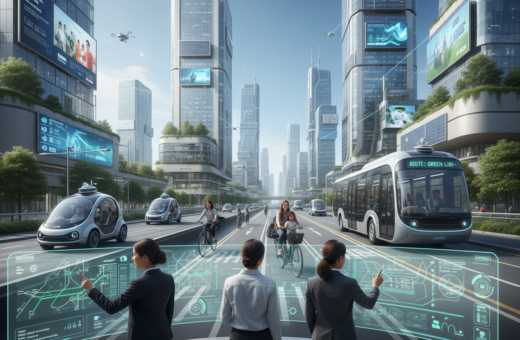
Connected roadways let vehicles anticipate hazards before a driver sees them. In cities such as san francisco, a linked city network can share live traffic signals, curb sensors, and road alerts with each vehicle.
The result is improved safety. Real-time data from traffic lights and pavement sensors helps a vehicle plan safer paths and avoid sudden hazards.
Future transportation networks will rely on smooth interaction between city hardware and the onboard system. That coordination makes automated driving more efficient on public roads.
- Municipal investment reduces congestion and improves the driver experience.
- City planners and vehicle makers must collaborate to create a unified environment.
- Smart infrastructure supports safer operation for self-driving cars and for human drivers sharing the road.
“A unified city-vehicle network turns scattered sensors into a coordinated safety layer.”
Consumer Confidence and Public Perception
Surveys show a gap between technical progress and how the public views vehicle safety. In 2022, only 27% of the world population said they felt safe in autonomous vehicles.
Addressing concerns starts with clear information about how the vehicle makes choices. Manufacturers must explain what the system can and cannot do.
Media coverage of accidents shapes public opinion. To counter fear, companies should publish consistent performance data and explain safety gains in plain language.
- Be transparent about decision logic and limits so the average driver feels informed.
- Show long-term records that prove vehicles perform reliably in real-world conditions.
- Communicate failures quickly and outline corrective steps to restore consumer trust.
“Building trust requires steady results and honest communication about limits.”
When the industry pairs clear reporting with strong performance, adoption of automated driving technology will follow more naturally.
The Impact of Data on System Performance
High-quality training sets shape how reliably a vehicle reads and reacts to the road.
Good data improves the performance of every module in a vehicle. Clean labels, varied scenarios, and wide geographic coverage help the system learn rare events quickly.
By collecting telemetry from fleets, manufacturers push iterative software updates that raise safety for self-driving cars. Those updates come from patterns found in real-world logs.
Automated driving relies on this flow of information to spot behaviors a driver may miss. As the volume of usable data grows, vehicles handle diverse weather, traffic, and road types more reliably.
- More data: better recognition of rare hazards.
- Continuous updates: improvements reach each vehicle faster.
- Privacy and security: protecting occupant and driver information is essential to trust.
“Data-driven improvement remains the single largest factor in elevating vehicle safety and real-world performance.”
Ethical Considerations in Automated Driving
Designing behavior for rare, high-stakes events means deciding who a vehicle should save when no option is risk-free. Engineers must encode priorities that reflect public values while meeting technical limits.
Edge cases present sharp moral choices. In some scenarios a quick decision pits the driver against other road users. These risks force teams to set clear rules for harm minimization.
Public acceptance depends on transparency. If people trust how a system weighs outcomes, they are likelier to adopt self-driving cars and support wider use of autonomous vehicles.
- Establish consistent guidelines for unavoidable accidents.
- Balance the safety of drivers, pedestrians, and other vehicles.
- Engage ethicists and the public to reflect shared values.
Ultimately, ethical design protects humans and improves traffic safety. Clear, published rules and ongoing dialogue help address concerns and reduce the risks that edge cases create.
Current Market Trends and Industry Shifts
Market leaders are reshaping rollout plans as real-world results refocus priorities for vehicle deployment today. Major firms now reassess where and how to place new fleet units to reduce risk and improve reliability.
Many companies favor targeted, city-level launches rather than broad national rollouts. This approach limits edge cases and speeds regulated approval for each vehicle type.
Consumer demand for advanced driver assistance is steering product teams to add practical safety features to new models. Buyers want convenience and proven performance over untested hype.
- Focused deployments match real-world scenarios and cut operational risk.
- Consolidation will favor companies with reliable technology and service models.
- Viewing the vehicle as a service supports sustainable, efficient transport.
“The market is moving toward realistic, local tests that show measurable safety gains.”
Result: a clearer path to wider acceptance of autonomous vehicles and a competitive field where only robust, well-supported self-driving cars win lasting trust.
Future Directions for Autonomous Transportation
Future fleets must coordinate so every vehicle contributes to a safer, more efficient transportation network.
As technology advances, each company will refine how a vehicle handles complex urban scenarios. R&D will push self-driving cars to react better in crowded streets, poor weather, and unexpected events.
Consumers will expect clear performance and reliability. That pressure will make makers improve the core system and driver interfaces so humans can trust each trip.
Long-term success depends on seamless integration: vehicles must link to city infrastructure, share data, and update software safely. This approach changes how we plan mobility and daily travel.
- Targeted fleet coordination reduces risk and improves route efficiency.
- Focused urban testing helps vehicles handle rare, real-world scenarios.
- Transparent reporting builds consumer confidence and speeds adoption.
- Continued investment lets the industry remove barriers to wider use.
“A harmonized transportation ecosystem will let humans move more safely and with greater freedom.”
Conclusion
The path forward requires steady testing, transparent reporting, and community engagement to win confidence. , By weaving artificial intelligence into modern vehicles, the transportation sector can raise safety and overall system performance on public roads.
Rigorous validation and adherence to national standards—especially those from the national highway traffic and highway traffic safety authorities—remain essential. Clear rules help builders improve each system while protecting drivers and pedestrians.
While challenges persist, continued refinement of autonomous vehicles and measured deployment of self-driving cars promise safer, more efficient streets. Success will depend on balancing innovation with the safety of the driver and the public at large.

 English