Today, brands that unite signals from online visits, service records, and in-vehicle apps shape better driver journeys.
A customer data platform for the auto industry pulls those streams together to build a 360-degree view that fuels personalized offers and timely service reminders.
This short guide explains what unified profiles mean for dealer networks and manufacturers in the United States. You will learn where information comes from, how a CDP works, and which platform features drive real results.
Expect practical outcomes: higher conversion, improved service retention, stronger loyalty, and leaner operations — without overpromising gains.
We also cover how the driver experience now blends physical and digital moments and show a clear approach from strategy to execution. For a deeper look at how a data-driven experience can steer industry change, see this framework.
Why customer data is reshaping the automotive customer and driver experience today
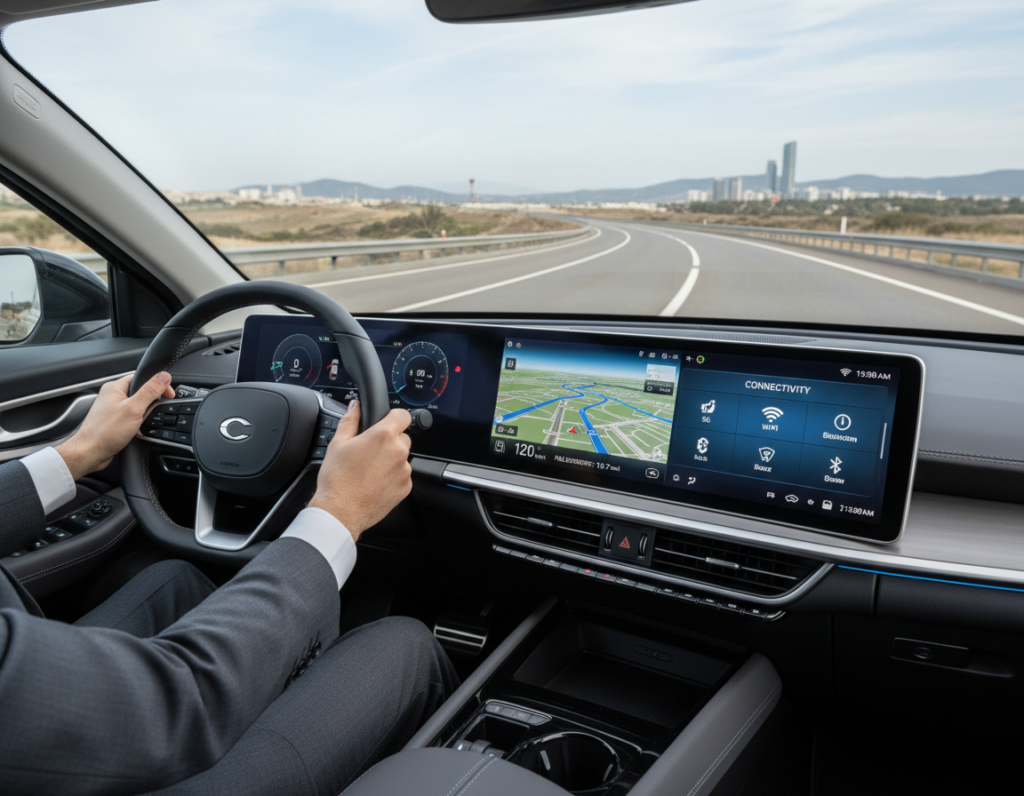
Driver expectations are changing as retail visits merge with always-on digital touchpoints. The driver experience now stretches beyond the showroom into mobile apps, ownership portals, connected features, and in-vehicle digital services.
Each touchpoint produces signals that a CDP can track — website visits, app actions, social interactions, and telematics — to build richer customer profiles. These profiles help teams deliver timely, relevant offers and service reminders.
Software-defined vehicles (SDVs) change the equation. Cars generate operational and interaction logs that join broader cloud ecosystems. That creates new services and more complexity for integration.
- 74% of industry leaders expect 2035 models to be software-defined and AI-powered, making software a brand differentiator.
- Hyperpersonalization is now expected: buyers want timely offers and consistent messaging based on real behavior.
- Accurate, unified profiles cut misfires — wrong offers or mistimed reminders erode trust and harm long-term engagement.
Bottom line: unified, real-time processing and always-on profiles are core platform requirements to turn these trends into better engagement, higher conversions, and stronger retention.
Automotive customer data: what it is, where it comes from, and how a CDP unifies it
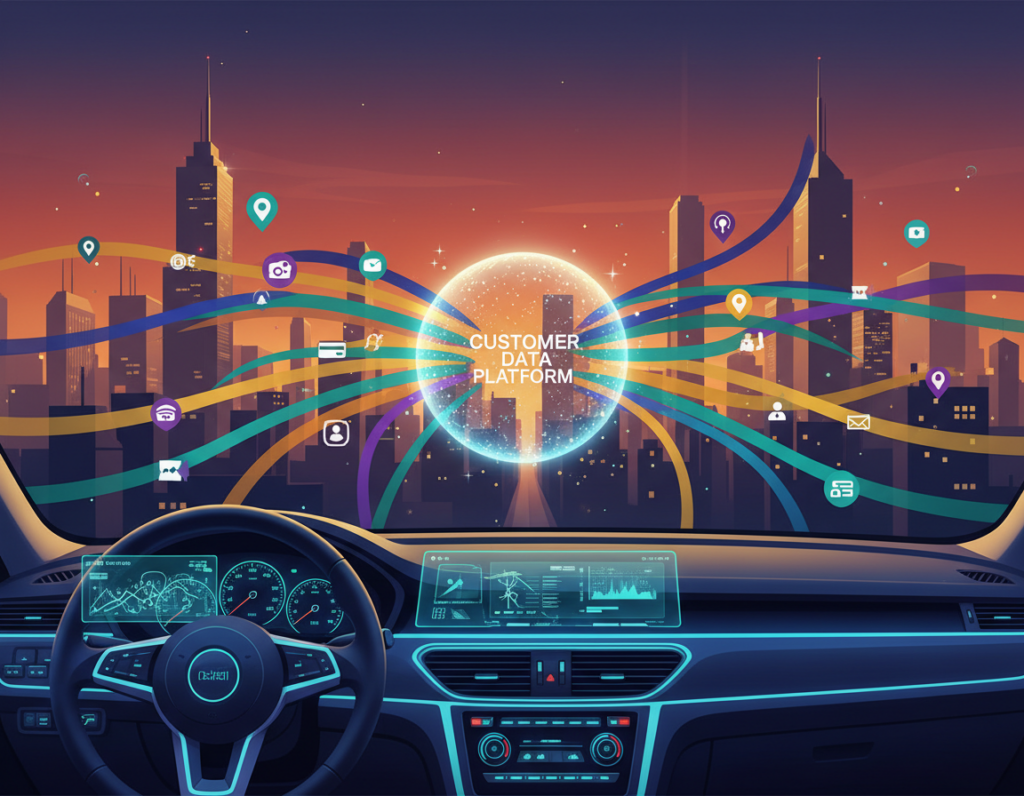
Many touchpoints — from web clicks to in-vehicle events — feed a single view that teams can act on.
Operationally, automotive customer data means behavioral signals (web/app actions), transactional records (sales and service), interaction logs (chat and calls), and vehicle/IoT telemetry. These elements shape experience design and revenue decisions.
Common sources include websites, mobile apps, CRM and DMS systems, chat tools, connected vehicles, and IoT sensors. These systems often sit in different vendor silos, which creates integration challenges for dealers and OEM teams.
What a CDP does
A cdp is a centralized data platform that ingests, standardizes, and stitches records into persistent profiles. Marketing, sales, and service teams can then activate segments across channels.
Eliminating silos with unified profiles
Unified profiles remove duplicate outreach and let teams suppress messages when a booking exists. That cuts operational friction and improves relationships with buyers at scale.
CDP vs CRM
CRMs focus on sales relationships and pipeline tracking. A cdp covers the full journey across touchpoints with richer segmentation and cross-channel activation. Both play a role; the platform complements CRM functions.
Identity resolution
Identity resolution matches email, phone, device IDs, and app identifiers. This keeps messaging consistent so customers receive coordinated outreach instead of conflicting contacts.
| Item | Typical Sources | Role |
|---|---|---|
| Behavioral | Website, mobile app | Segmentation, retargeting |
| Transactional | CRM, DMS | Sales history, service reminders |
| Interaction | Chat, calls | Support resolution, follow-up |
| Connected signals | Vehicle telematics, IoT | Predictive maintenance, usage insights |
For dealerships, unifying these streams lets dealers and OEM teams coordinate marketing, service, and digital experiences without breaking continuity. The result is more relevant outreach and cleaner operational workflows.
High-impact use cases that improve marketing, sales, service, and loyalty
When profiles are joined and kept current, teams can run higher-impact offers, service reminders, and loyalty programs.
Audience segmentation for targeted offers, media, and marketing campaigns
Segmentation creates audiences by make/model interest, lifecycle stage, and service due dates.
That reduces waste and raises relevance for marketing campaigns and paid media buys.
Personalized vehicle recommendations and next-best-action engagement
Use browsing and past purchases to serve personalized trims, incentives, and finance options.
This increases engagement and lifts sales while shortening decision cycles.
Service reminders, appointment follow-ups, and predictive maintenance signals
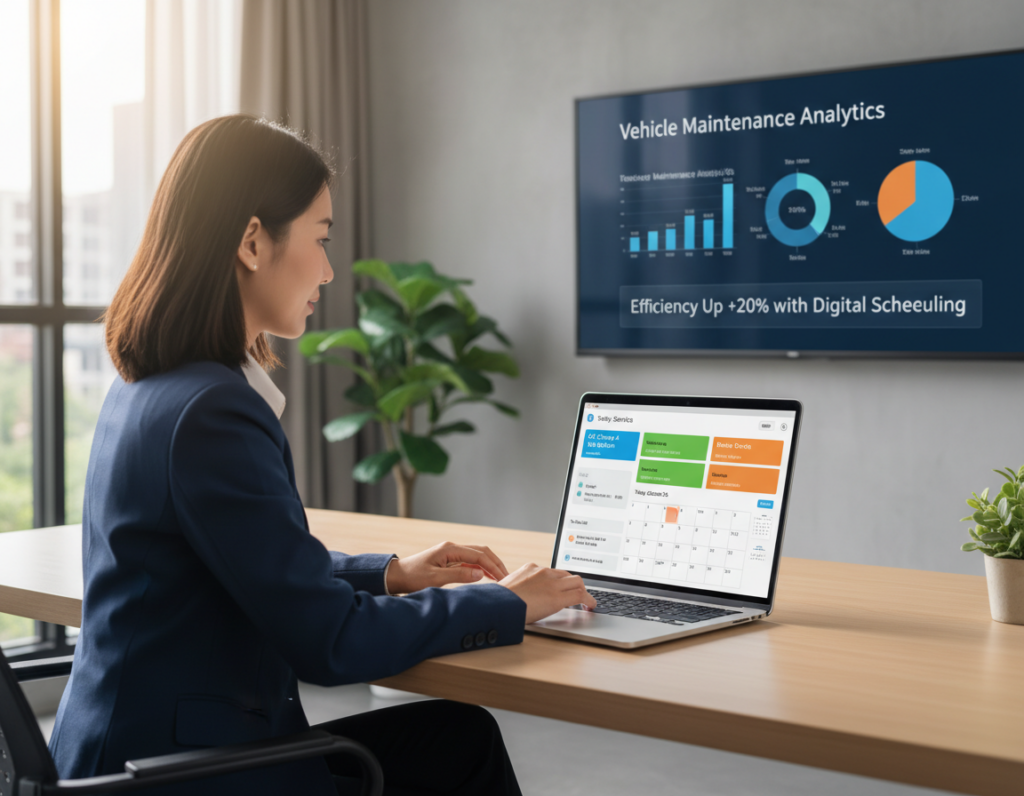
Timely service reminders and automated follow-ups improve service penetration and reduce missed visits.
Connected telemetry enables predictive alerts that make outreach more useful and timely.
Lead nurturing, loyalty, and inventory management
Automated content sequences educate leads with model comparisons and trade-in guidance to boost conversions.
Programs driven by purchase history and usage patterns personalize loyalty rewards and raise retention.
Used-vehicle inventory management uses vehicle history and local demand patterns to price smarter and build trust.
| Use case | Primary benefit | Key signals |
|---|---|---|
| Segmentation for campaigns | Lower media waste, better targeting | Web behavior, purchase history |
| Service & predictive maintenance | Higher service penetration, fewer missed intervals | Telematics, service records |
| Lead nurturing & sales | Faster conversion, improved pipeline | Engagement, leads, content interaction |
| Inventory management & loyalty | Smarter stocking, higher lifetime value | Vehicle history, market patterns |
Buyer’s guide to choosing an automotive customer data platform
Start with a practical checklist that matches platform capabilities to your real-world tech stack and dealer operations.
Data ingestion and integration
Confirm the cdp can ingest web, apps, CRM/DMS, chat, and vehicle streams without custom work for every feed. Ask for connectors and sample ingestion timelines.
Unification and profile quality
Look for field normalization, duplicate resolution, and automated profile hygiene. Reliable profiles cut segmentation errors and reduce wasted outreach.
Real-time processing
Real-time updates enable timely suppression, accurate service reminders, and responsive personalization. This is a key differentiator for buyer experience.
Segmentation, personalization, and analytics
Choose platforms with rule-based and behavior segments, propensity signals, and multi-channel activation. Dashboards should show campaign performance, funnels, and market trends.
Governance, APIs, scalability, and vendor fit
Verify GDPR/CCPA readiness, encryption, and role-based access. Confirm API access for custom integrations and check scalability for inventory swings and new markets.
| Area | Must-have | Why it matters |
|---|---|---|
| Ingestion | Prebuilt connectors | Faster onboarding, lower engineering cost |
| Unification | Identity resolution | Clean profiles for activation |
| Processing | Real-time streaming | Timely service and offers |
| Governance | Encryption & access controls | Compliance and trust |
Budget tip: total cost = licensing + implementation + ongoing maintenance + internal cleanup. For a deeper read on marketing strategies, see mastering automotive marketing strategies.
Conclusion
, A unified profile strategy turns scattered signals into timely, actionable experiences across ownership and retail.
CDPs unify automotive customer data into holistic profiles that enable personalization, targeted marketing, and smarter service reminders.
Better profile quality and timing strengthen customer relationships, increase trust, and lift loyalty across the ownership lifecycle.
Prioritize platforms that fit your tech stack, protect privacy, and scale with SDV-driven growth. Monitor performance, collect feedback, and refine strategies continuously.
Decision: choose solutions that enable real activation across channels, support ongoing optimization, and deliver measurable business benefits for dealerships and manufacturers.