
Anúncios
Modular vehicle platforms are shared sets of parts and underpinnings that let makers build many models from the same core. In plain terms, they swap one-off engineering for reusable building blocks. That shift is now a central strategy in the automotive industry, not just a niche tactic.
In this ultimate guide you’ll learn clear definitions, core concepts, and real-world design and production implications. We will show where this approach raises efficiency, cuts costs, and supports wider product variety. We also flag where high reuse can backfire.
Market forces—more nameplates, faster model cycles, EV rollouts, and tight budgets—are forcing platform-based thinking today. Common underpinnings boost line utilization and flexible assembly, letting brands offer varied trims, powertrains, and regional specs without full redesigns.
Later sections separate passenger-car logic from commercial needs and include the Stellantis CMP/e-CMP case study as a concrete example of how one set of shared systems supports multiple brands, body styles, and electric variants.
What a Vehicle Platform Is and Why It Matters in Automotive Manufacturing
In engineering terms, a platform is the shared structural baseline and packaging rule set that lets one core underpin many models. It groups hard points, mounting locations, subframes, and key geometry so different cars can reuse the same foundations. This reduces duplicated engineering work and speeds production planning.
Anúncios
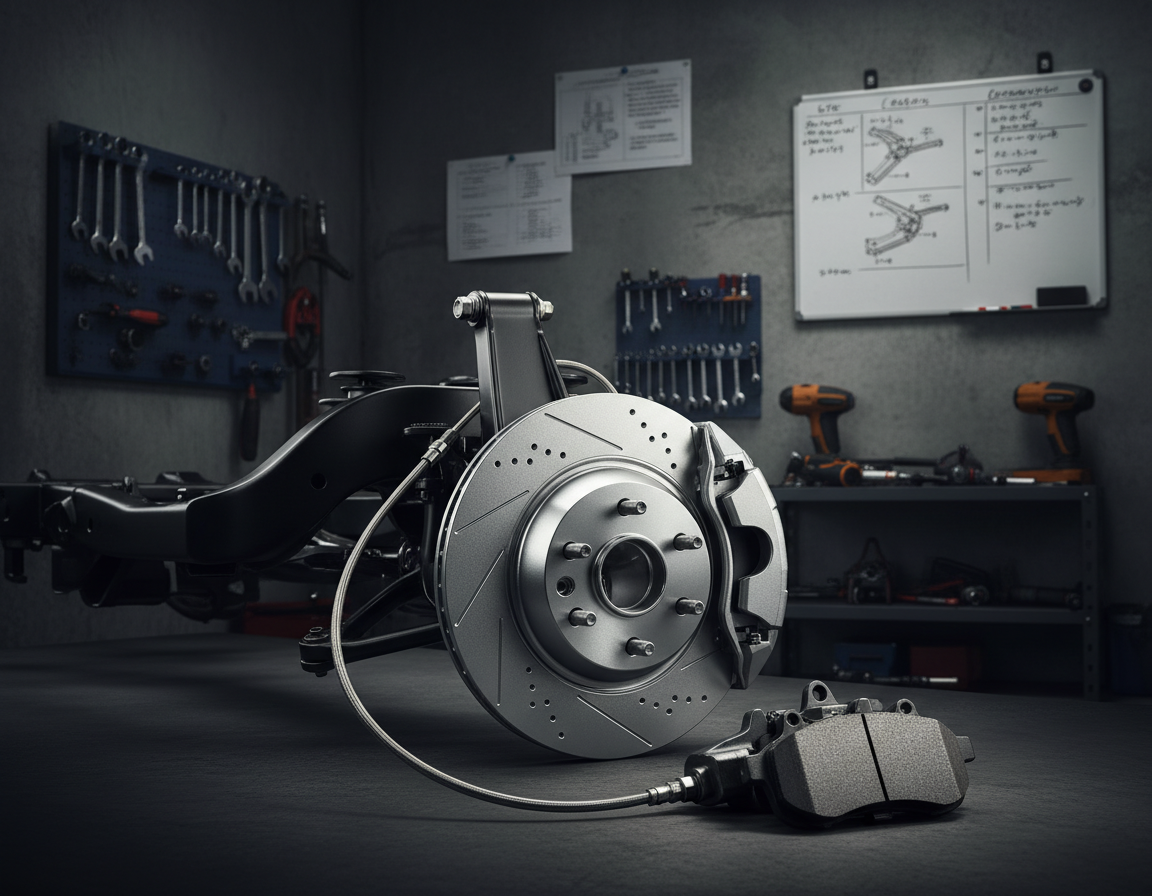
The chassis is the load-bearing frame and suspension cradle. Body modules cover upper styling, doors, and trim. A platform bundles the chassis, major mounting interfaces, and common systems so upper bodies can stay unique.
How standardized interfaces enable modularity
- Shared connectors, repeatable mounting geometry, and consistent tolerances make components and modules interchangeable.
- That lets engineers swap powertrains, rear modules, or electronics families without reworking the whole architecture.
Why this matters to manufacturers: Once interfaces are fixed, tooling, supplier contracts, and production lines can be reused across programs. Platform choices become long-term capital and product decisions that shape cost, speed, and risk.
Anúncios
Why Modular Vehicle Platforms Are Taking Over Right Now
Today, tight deadlines and shifting demand are forcing automakers to rethink how they design and launch new products.
Faster development cycles
Faster development cycles and time-to-market pressure
Shared platform engineering shortens development and cuts repeated validation work. Teams reuse designs, which speeds testing and certification.
That reduces lead time from concept to showroom. Faster launches help brands react to trends and keep market share.
Rising costs, expanding product range, and more variants
Higher costs push manufacturers to spread tooling and software expenses across many models.
Growing product range and rising variant counts—powertrains, trims, and regional specs—raise complexity.
- Reuse lowers unit costs by sharing parts and supplier validation.
- One architecture manages many derivatives and keeps production lines stable.
EV growth and the need for flexible architecture
Electric vehicle design changes how teams think about packaging, battery safety, and software features.
Flexible architecture now often means multi-energy support so companies can offer ICE, hybrid, and BEV variants where the business case fits.
| Driver | Effect on development | Effect on production | Business outcome |
|---|---|---|---|
| Time-to-market | Shorter validation cycles | Faster line changeovers | Faster model launches |
| Rising costs | Shared engineering | Lower per-unit tooling costs | Improved margins |
| EV growth | Common battery layouts | Unified safety processes | Scalable electrification |
Market realities in the U.S. — quick demand shifts, regulation, and new entrants make flexibility essential. Later sections will show where economies of scale work best and where a different playbook is needed for commercial use.
Modular vehicle platforms: The Core Concepts You Need to Understand
Grasping the basics—what counts as a module, how systems are grouped, and why performance steps exist—helps product teams design for scale.
Modules, systems, and component families explained
Modules are self-contained assemblies you can swap or upgrade without redesign. Examples include a rear suspension module or a complete infotainment unit.
Systems group related modules and electronics, such as the E/E system or thermal management system.
Component families are series of parts tuned by output or size. Think of a motor/inverter family offered in base, mid, and high output versions.
Performance “steps” that match customer needs
Performance steps mean offering graded outputs instead of unique parts for each trim. A single interface accepts multiple power levels.
This approach keeps the same mounting and connectors. Upgrades change only internals, not the whole architecture.
Different levels of modularity across models and markets
Level modularity shifts with brand strategy, market demand, and regulation. What is shared in one region may be altered in another.
Customer clustering helps here: identify overlapping needs, then standardize where scale gives the biggest wins.
| Concept | Practical example | Benefit |
|---|---|---|
| Module | Rear suspension assembly | Speeds production and simplifies repairs |
| System | Infotainment + telematics | Unified software updates and testing |
| Component family | Motor/inverter range | Right-sized performance with shared mounts |
Trade-offs: the aim is more model variety with fewer unique solutions for production. That balance depends on several factors.
Modular concepts only work when design rules are enforced across engineering teams. The next section shows how geometry and structure meet those rules in practice.
How Modular Platform Design Works in Practice
Platform design joins geometry, systems, and styling into a single set of trade-offs engineers must resolve. That three-perspective approach keeps structure, function, and look aligned so production stays predictable.
Geometry and structure
Hard points on the chassis let engineers offer multiple wheelbase and track options without a full redesign. Changing a rear module swaps cargo and suspension layouts while reusing the same core.
Stellantis CMP uses two track widths, three wheelbase lengths, and three rear modules to fit hatchbacks, sedans, and SUVs from one base.
Functional attributes
At the architecture level teams set crash targets, scalable E/E layouts, ADAS sensor packaging, and NVH goals. These rules live in the platform so every car meets safety and cost targets.
Styling flexibility and trade-offs
Brands keep unique top hats with bespoke panels, lighting, and interiors. Still, extreme aerodynamic choices can improve range but reduce interior space or hurt brand identity.
Balancing conflicts requires iterative trade studies. A styling request may change structure. A safety update may shift packaging. Tight cooperation reduces late changes that disrupt production readiness.
| Perspective | Key design factor | Example | Production impact |
|---|---|---|---|
| Geometry | Wheelbase / track | Two widths, three lengths (CMP) | Less retooling, faster launches |
| Functional | E/E & ADAS | Modular wiring and sensors | Scalable testing, lower costs |
| Styling | Top-hat differentiation | Panels, lighting, interior trim | Maintains brand appeal |
Manufacturing Advantages of Modular Platforms
Production lines gain flexibility when a single engineered base lets many models share core systems. That shift turns fixed capacity into an asset that responds to market swings.
Producing multiple vehicles on the same assembly line
Mixed-model production improves plant utilization and lowers the cost of idle capacity. Plants can run sedans, SUVs, and electrified derivatives in the same flow.
To do this you need standardized interfaces, consistent datum strategies, shared joinery methods, and aligned quality checks across derivatives.
Reducing complexity while increasing variety
Common parts narrow the number of unique components that manufacturing must stock, sequence, and validate. That reduces inventory, cuts sequencing errors, and simplifies inbound logistics.
The result is visible variety for buyers with fewer part numbers to manage behind the scenes.
Quality and repeatability from shared components
Proven components and repeatable processes raise first-pass yield. Higher install volumes expose defects earlier and improve supplier feedback loops.
- Faster line balancing and fewer specialized stations
- More predictable ramp-up during launches
- End-to-end simplification in material flow and planning
Note: Gains depend on disciplined governance and strict change control so commonality is preserved as programs evolve.
Economies of Scale, Costs, and Efficiency Gains
Economies of scale reshape how costs flow across development, tooling, and production when a shared base supports many models.
Where costs fall
Engineering development drops when teams reuse designs and test plans. That reduces duplicate validation and shortens program time.
Tooling costs fall because fewer unique tools and jigs are needed. Suppliers can deliver higher-volume components with steadier lead times.
Component reuse lowers per-unit part costs and simplifies inventory for manufacturing.
Scale versus volumes
Scale is the leverage from shared parts and processes. Volumes are how many cars you sell. Both must align for savings to pay back.
| Concept | Role | Outcome |
|---|---|---|
| Scale | Shared parts/processes | Lower unit cost |
| Volumes | Production runs | Return on investment |
When reuse can add cost or constrain choices
Over‑engineering for too many use cases or heavier structures can raise costs. Interface rules may force trade-offs that limit packaging, proportions, or top-end performance.
Decision lens for manufacturers: maximize reuse where customer overlap is real, and preserve uniqueness where product differentiation matters. This balance drives efficiency and long-term market success.
How Modular Platforms Reshape Supplier Networks and Product Development
When companies agree on common interfaces, the ripple effect reaches every tier of suppliers and changes how parts are sourced and validated.
Standard interfaces and supplier coordination
Standard interfaces force suppliers to align on specs, tolerances, and test methods. That alignment reduces variation at assembly and speeds certification.
Suppliers must adopt shared validation protocols and supply consistent batches. This raises the importance of supplier quality as a strategic lever for production reliability.
Joint development and shared engineering investment
Joint development becomes common. A clear example: PSA (now Stellantis) and Dongfeng began CMP work in March 2014.
Reported project spend was ~€200,000,000, split ~60/40, with Dongfeng engineers embedded at PSA’s R&D center in Vélizy. That model lowers risk and accelerates development.
Practical effects on procurement and product teams:
- Fewer unique part numbers and longer supplier agreements.
- Greater emphasis on scalable component families and systems integration.
- Earlier interface freezes and tighter cross-functional governance (engineering, procurement, manufacturing).
| Area | Supplier impact | Product development impact | Business outcome |
|---|---|---|---|
| Standard interfaces | Consistent specs & validation | Faster approvals | Lower production variation |
| Joint investment | Shared engineering resources | Accelerated development | Lower program risk |
| Supply cadence | Performance-critical suppliers | Earlier freezes, tighter change control | Improved economies of scale |
Longer term: value shifts toward software, electronics, and systems integration as manufacturers focus on where platform-level value sits. That makes supplier networks central to competitive advantage in the automotive industry.
EV Battery Integration and Power Systems on Modular Architectures
Battery integration shapes both the engineering choices and the customer experience for modern electric passenger cars. Pack location and system design decide cabin space, center of gravity, and crash protection. These priorities guide every electrical and structural decision.

Battery placement goals for passenger EVs
Maximize usable interior and cargo space by tucking modules under the floor. That preserves cabin layout and cargo volumes typical buyers expect.
Lower center of gravity improves handling and stability, giving a planted feel without complex suspension retunes.
Protect the pack with crash structures and serviceable mounts to ensure long-term durability and safety.
Repeatable integration and variant strategy
Consistent underfloor geometry, standardized mounts, and common high-voltage routing make pack installation repeatable across derivatives.
This lets OEMs offer different range and power trims without reworking the whole car. Interfaces stay stable while internal cell counts or module counts change.
Charging, thermal systems, and efficiency
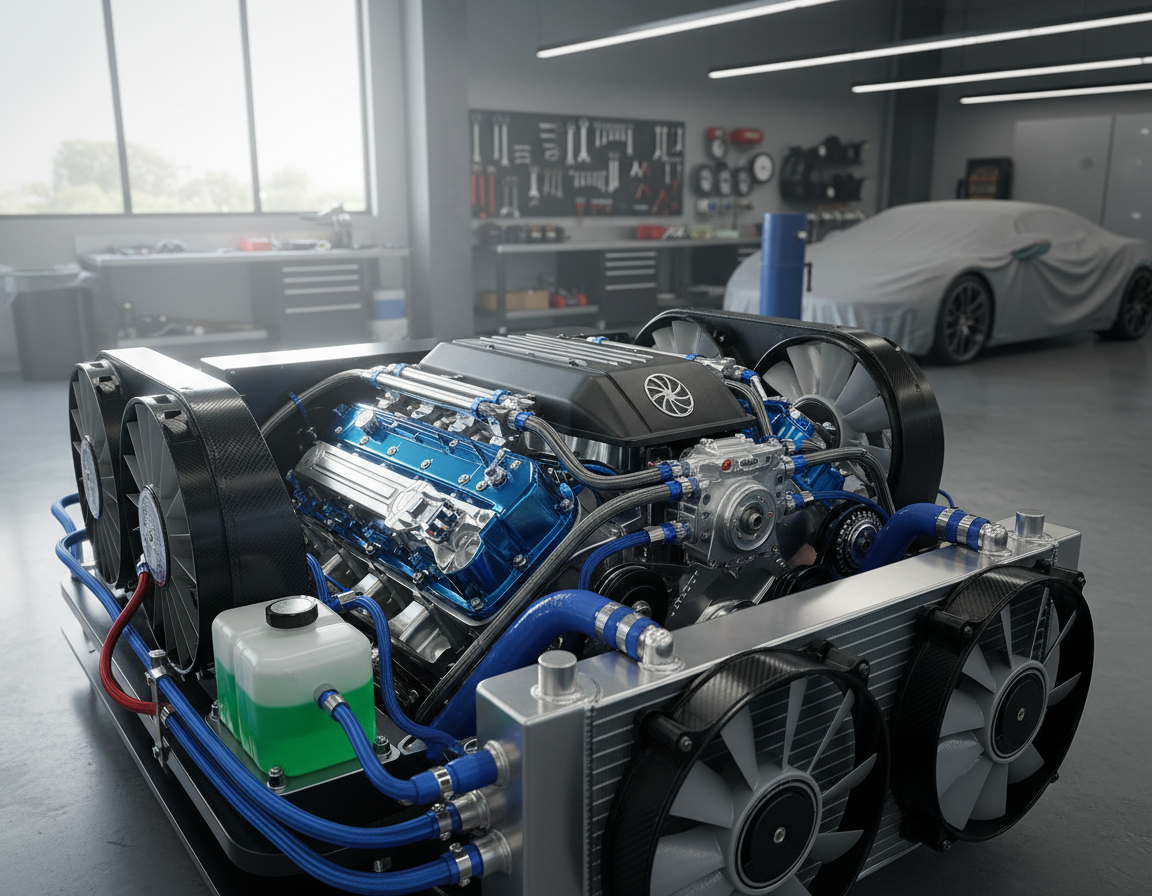
Charging and cooling are platform-level choices. Heat pumps, cooling loops, and packaging limits affect all trims derived from the same base.
| Item | First-gen e-CMP | Second-gen e-CMP |
|---|---|---|
| Motor output | 100 kW (136 PS) | 115 kW (156 PS), 260 N·m |
| Battery gross / net | 50 kWh gross (46.3 kWh net) | 54 kWh gross (51 kWh net) |
| Thermal | High-performance heat pump | Enhanced cooling and packaging |
Efficiency depends on aero, mass, rolling resistance, and thermal strategy. Shared battery placement delivers predictable drive feel while brand tuning preserves unique handling and customer expectations.
Passenger Cars vs. Commercial Vehicles: Two Different Modularity Playbooks
Not every production playbook fits all use cases—what scales for mainstream cars often fails for heavy-duty fleets.
Why passenger cars lean on standardization: High-volume models can sell near 1,000,000 units per year. That scale rewards repeatable design, faster ramp-up, and lower per‑unit costs. Standard interfaces and controlled change reduce time-to-market and maximize economies of scale for production and manufacturing.
Why commercial trucks require deeper customization: Typical truck runs are closer to 100,000 units for core models, and fleet use is intense—over 300,000 km/year in many cases. Fleets need tailored body upfits, axle options, and uptime guarantees, so the approach favors serviceability and durable modules over pure standardization.
Lifecycle strategy: For fleets, swapping a powertrain, axle, or telematics module often beats a full redesign. Upgrading modules reduces downtime and preserves fleet economics. The right architecture choice depends on market, duty cycle, and how customization is monetized.
For an example of how telematics and remote operations change fleet economics, see teleoperations partnerships.
Case Study: Stellantis Common Modular Platform and Its Electric Variants
Stellantis used CMP to balance cost, variety, and production efficiency across B‑segment and entry C models.
CMP basics: CMP (EMP1) launched with the DS 3 Crossback in 2018 and targets small cars and some entry C models. Larger C‑segment vehicles moved to EMP2, keeping scope clear between architectures.
CMP flexibility toolkit
The architecture offers two track widths, three wheelbase lengths, three rear modules, and multiple wheel diameters. That toolkit supports hatchbacks, sedans, and SUVs while keeping a shared chassis and common components.
e‑CMP manufacturing strategy
e‑CMP and its follow-up were engineered so BEV and ICE derivatives can run on the same assembly line. This approach improves plant flexibility and reduces the need for separate production cells.
Power and battery evolution
First‑gen e‑CMP used a 100 kW motor and a 50 kWh gross (46.3 kWh net) pack with an advanced heat pump. The second gen upgraded to an eMotors M3 at 115 kW and 260 N·m plus a 54 kWh gross (51 kWh net) NMC battery.
Smart Car Platform (SCP)
SCP is a budget BEV spin on the same family, developed with external partners. It pairs 43 kW or 83 kW motors with 29–44 kWh LiFePO4 packs and is planned to underpin about seven models for cost‑focused markets, with range targets up to ~320 km.
Real‑world applications
Examples span Peugeot, Opel, Citroën, DS, Jeep, and Fiat: Peugeot 208/2008, Opel Corsa/Mokka, DS 3 Crossback, Jeep Avenger, Fiat 600 and their e‑variants. SCP additions include smaller Citroën and Fiat projects.
Takeaway: CMP demonstrates how a shared engineering base can speed rollouts of many models, let manufacturers reuse production assets, and still deliver regional and brand variety.
Implementing a Modular Platform Strategy Without Losing Differentiation
Keeping brand character while sharing a common engineering base demands clear design rules and disciplined execution.
Managing brand identity through design, tuning, and feature sets
Preserve identity by targeting visible and felt cues: exterior and interior styling, software UX, and feature packaging.
Tune suspension, steering, and NVH targets so each model delivers a distinct drive feel. Software can add branded menus, sounds, and services.
Platform governance: deciding what must be shared vs. what stays unique
Governance is the make-or-break discipline. Freeze key interfaces, hard points, and electronics backbones early. Protect brand touchpoints as intentional exceptions.
“Clear interface standards and a strict change-control board stop short-term requests from swelling part numbers.”
Partner ecosystems: how contract manufacturers and engineering partners help
Use contract assemblers and engineering partners to speed launches and de-risk program delivery. Suppliers and networks deliver validated components and adapted subsystems.
Example: Magna positions itself as a one-stop engineering partner that converts a base architecture into tailored products for new entrants.
| Area | Action | Outcome |
|---|---|---|
| Design & tuning | Brand-specific styling and NVH targets | Distinct customer perception |
| Governance | Interface standards & change-control board | Preserved economies of scale |
| Partner network | Contract manufacturing & engineering services | Faster, lower-risk launches |
Implementation checklist: align product strategy, platform standards, network readiness, and manufacturing execution to keep scale without sameness.
Conclusion
The core lesson is simple: a well‑executed platform lets teams launch more models faster while keeping production and manufacturing costs controlled. strong,
Standardized interfaces, strict platform governance, and clear performance steps are the levers that make this work. These rules let product teams scale without multiplying the number of unique parts.
Economics come down to scale and volumes. When outputs match demand, economies of scale cut per‑unit cost and simplify production sequencing.
For EVs, a repeatable architecture speeds battery and E/E integration across multiple models and helps firms react to rapid market shifts.
Passenger and commercial strategies diverge: passenger cars chase standardization for scale, while commercial builds prioritize serviceability and tailored uptime.
Stellantis’ CMP/e‑CMP shows one architecture can span brands and models when interfaces and production planning are tight. The right approach balances product differentiation, manufacturing feasibility, supplier coordination, and long‑term roadmap factors.


 English