
Anúncios
Stopping power defines safety. Car brakes are the primary way drivers slow and stop to avoid collisions. Modern advances like ABS, ESC, and AEB cut stopping distance and help drivers keep control in split seconds.
This short guide explains how a braking system moves force from pedal to wheel. You will learn main components, how pressure travels, and why new designs reduce loss of control on U.S. roads.
Today’s driving realities—heavier vehicles, higher highway speeds, and dense traffic—raise the stakes for reliable systems. Effective brakes help when drivers face red lights, sudden obstacles, or stop-and-go congestion.
Later sections compare disc versus drum designs, common wear points, and how to spot warning signs before stopping distance increases. For background on caliper-level innovation and its safety impact, see this primer on caliper advances: caliper innovation and safety.
Why modern braking systems are a make-or-break safety feature on U.S. roads
A vehicle’s ability to stop quickly and predictably shapes safety every time drivers face a sudden hazard.
Anúncios
How stopping power and control prevent crashes in everyday driving
Stopping power means slowing the wheels in a predictable way while you keep steering control so the car stays in its lane.
In common U.S. scenarios—merging on interstates, abrupt slowdowns, or distracted-driver cut‑ins—consistent braking and stable control cut crash risk.
Why safety tech keeps evolving with speed, weight, and traffic
Modern safety features like ABS, ESC, and AEB help reduce skids and improve stability during panic stops. They make stopping distances shorter and more repeatable across road conditions.
Anúncios
That performance depends on steady hydraulic pressure so pedal input becomes reliable clamp force at the wheels.
“Shorter, predictable stops and fewer skids are the direct outcomes of improved control tech.”
| Challenge | What evolves | Measured benefit |
|---|---|---|
| Heavier vehicles (SUVs, EVs) | Stronger calipers and cooling | Consistent stopping under load |
| Higher speeds | Faster ABS response | Reduced skids, better lane control |
| Dense traffic | Repeatable pedal feel | Shorter, predictable stopping gaps |
Watch for changes in pedal feel—a hard pedal or long travel can signal reduced control long before parts fail completely.
Automotive brake systems basics: the core parts and what they do
Begin at the brake pedal and follow the path that converts a driver’s push into friction at the tires. Name the main parts so you can spot them: pedal, booster, master cylinder, brake fluid, brake lines and hoses, and the wheel-end actuators.
Brake pedal and brake booster: turning driver input into usable force
The pedal is the driver’s lever. A light push alone won’t stop a heavy car quickly. The brake booster multiplies leg force so normal stops don’t need excessive effort.
Master cylinder and hydraulic pressure: how brake fluid carries braking force
The master cylinder is the pressure generator. When you press the pedal it pushes a piston in the master and creates hydraulic pressure.
That pressure pushes on the brake fluid, which carries the force through the lines to each wheel.
Brake lines and brake hoses: delivering pressure to each wheel reliably
Rigid brake lines run under the car and keep pressure steady. Flexible brake hoses reach the moving suspension and must handle heat and high pressure without leaking.
Brake calipers and wheel cylinders: applying pads or shoes where it counts
At each wheel, calipers or wheel cylinders convert fluid force into motion. Calipers squeeze pads against a rotor; wheel cylinders push shoes inside a drum. Both create friction to slow the wheels.
Quick mental model: the front end (pedal, booster, master) makes pressure; the back end at the wheels turns pressure into friction.
For a deeper technical primer on how parts interact, see this overview on how a car’s braking components work: how a car’s braking system works.
How a car brake works step by step, from pedal press to full stop
A single push at the pedal sets off a chain of events that ends with your car slowing to a stop. Understanding that chain helps you spot problems before they become dangerous.
From foot to fluid: the mechanical and hydraulic sequence
Step-by-step:
- Driver presses the brake pedal. The booster multiplies that force so modest leg effort creates usable stopping power.
- The booster drives the master cylinder, which generates hydraulic pressure in the brake fluid.
- That pressure travels through lines and hoses to the wheel-end actuators.
- Caliper pistons squeeze pads on a rotor, or wheel cylinder pistons push shoes against a drum, creating friction at the wheels.
How kinetic energy becomes heat through friction
When pads or shoes bite the rotating parts, they convert the vehicle’s kinetic energy into heat. That is why the rotors and drums get hot after repeated stops.
Repeated hard braking can overheat the friction material and the brake fluid. Overheated fluid loses hydraulic performance, which reduces pedal feel and stopping power—this is the start of fade.
Disc vs. drum at the wheel
Disc setups are open to air, so rotors cool faster and deliver more consistent performance in repeated stops. Drum designs are enclosed, which can trap heat and moisture but still work well for lower-demand rear applications.
“Good pedal feel depends on steady pressure and cool friction surfaces.”
Disc brakes vs. drum brakes in the United States: what you likely have and why it matters
A quick look at front- and rear-end layouts shows why most U.S. cars stop the way they do.
Typical U.S. layouts
Most passenger vehicles use disc brakes up front. The front axle handles more of the load, so open rotors and calipers give steady friction and cooling under repeated stops.
Many cars keep a disc or drum on the rear depending on trim and cost. Drum brakes remain limited to rear placement in U.S. models.
Heat management and brake fade
Brake fade is reduced effectiveness after repeated use because of heat buildup. Disc designs shed heat faster, so they stay more consistent in long or hard braking.
Drum designs trap heat and are more prone to fade under sustained demand.
Wet-weather performance and self-cleaning
Open rotors clear water quickly, improving initial bite in rain. Discs tend to be self-cleaning: pads wipe the rotor each time you apply them.
Drum systems can hold moisture and dust, so they sometimes need cleaning to restore full bite.
“Disc setups give more repeatable feel; drums perform well but need more care.”
| Feature | Disc (front) | Drum (rear) | Typical replacement |
|---|---|---|---|
| Heat control | Good, cools fast | Enclosed, traps heat | Rotors ~30k–70k miles |
| Wet performance | Sheds water, quick bite | May trap moisture | Pads ~25k–65k miles |
| Maintenance | Replace pads and rotor | Replace shoes; drums last longer | Shoes ~35k–60k; drums ~150k–200k |
What gets replaced most: on disc-equipped wheels you swap pads and sometimes rotors. On drum-equipped rears you replace shoes and occasional drums or hardware.
Brake system innovation that improves control and reduces stopping distance
Electronic and electric advances now help drivers keep steering control under hard brakes. These modern features focus on preventing wheel lock, keeping traction, and shortening the time and distance to stop.
ABS: preventing wheel lock during hard braking
ABS uses wheel sensors and fast actuators to detect lockup and modulate pressure. It can cycle more than 15 times per second, doing the pumping a driver cannot. The result: maintained steering while slowing.
Electronic stability control and autonomous emergency braking
ESC adds a stability layer. It selectively applies braking to individual wheels and trims engine output to correct understeer or oversteer.
AEB watches the road and can apply the brakes when a collision risk appears. That gives drivers critical milliseconds of help in real traffic.
Regenerative braking on hybrids and EVs
Regeneration uses the motor to slow the vehicle and recapture kinetic energy to the battery. Friction brakes still engage when more stopping force is needed.
Drivers may notice different pedal feel where regen blends with friction braking. Proper pads, brake fluid, and healthy hardware remain vital for safety.
Primary hydraulic vs. parking/emergency backup
Most cars have a primary hydraulic braking system plus an independent mechanical parking brake. This redundancy supports parking and offers a backup if the main system loses pressure.
| Innovation | Primary benefit | Driver impact |
|---|---|---|
| ABS | Prevents wheel lock; preserves steering | More control under hard stops |
| ESC | Corrects vehicle yaw and slip | Stability in evasive maneuvers |
| AEB | Automatic collision mitigation | Reduced impact speed or avoided crash |
| Regenerative braking | Energy recovery and smoothing deceleration | Changed pedal feel; less wear on pads |
How to check your brakes for safety: warning signs and what they usually mean
A few simple checks can reveal early wear before stopping distance or control degrades.
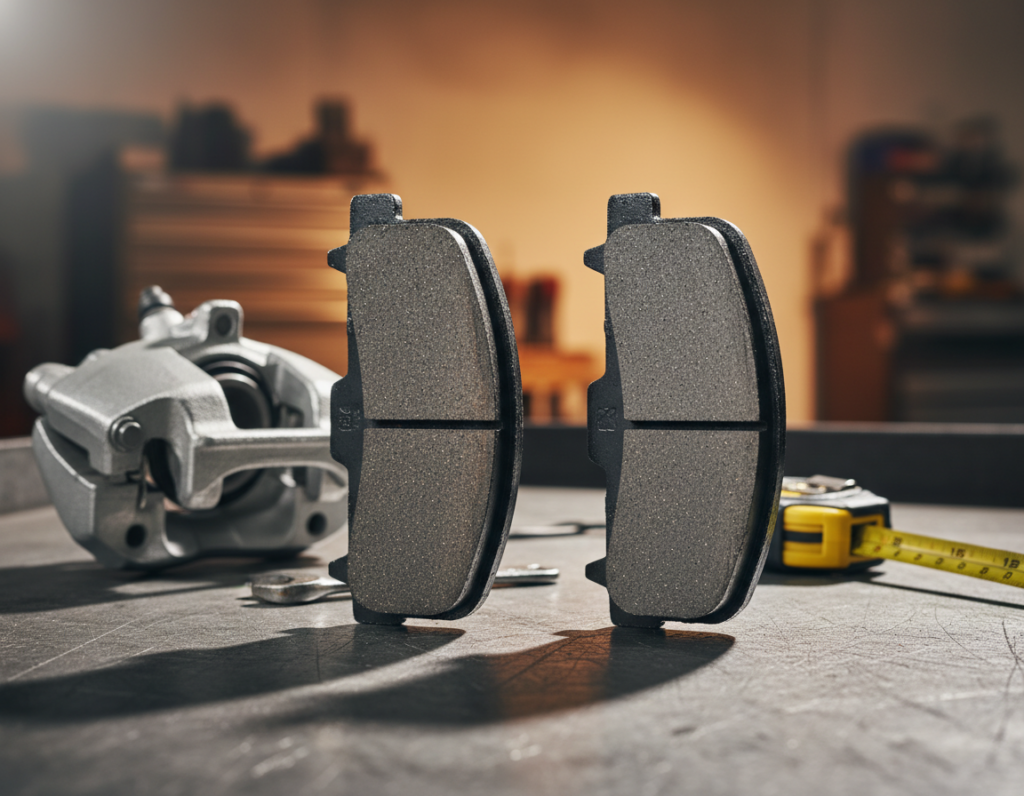
Start with feel. Press the brake pedal gently and note travel and firmness. A pedal that sinks or feels spongy often points to reduced hydraulic pressure. Low or contaminated brake fluid can cause this.
Vibration in the steering wheel
If the steering wheel shudders during braking, uneven wear or warping at the wheel can be the cause. This vibration usually gets worse at higher speeds and means rotors or related parts need inspection.
Hard or spongy pedal
A hard pedal can indicate reduced assist or a failed booster. A soft, spongy pedal most often signals air in lines, leaks, or degraded brake fluid that lowers hydraulic pressure.
Squealing or grinding
Squeals often come from wear indicators on brake pads; they warn you the pads need replacing. Grinding means the pads or shoes may be worn to metal and can damage rotors or drums. Replace worn parts promptly.
Car pulling to one side
If the car pulls while braking, uneven friction at the wheels is likely. Sticky caliper pistons, contaminated pads, or a faulty wheel cylinder create uneven application and require service.
Dashboard brake light
A lit brake warning light is not a hint—it’s a call to stop and inspect. Driving with that light on raises risk. If stopping distance suddenly increases, the pedal sinks, or grinding occurs, treat the issue as urgent.
- Feel first: pedal travel and firmness.
- Listen next: squeal versus grind.
- Watch behavior: vibration or pulling.
- Check alerts: dashboard light and servicing needs.
| Warning sign | Likely cause | Immediate action |
|---|---|---|
| Steering vibration | Uneven wheel wear / warped rotor | Inspect rotors and replace worn parts |
| Spongy pedal | Air in lines or old brake fluid | Check fluid, bleed lines, fix leaks |
| Squeal / grinding | Worn pads or shoes; metal contact | Replace pads/shoes; inspect rotors/drums |
| Pulling to one side | Sticking caliper or wheel cylinder | Service caliper/cylinder and clean pads |
| Brake light on | System fault or low fluid | Stop, inspect, and have professional check |
Conclusion
Control and safety start with energy turned into predictable friction, and that process is what a braking system must do well.
Driver input at the pedal pushes the master cylinder, the fluid carries pressure, and pads or shoes at a disc or drum slow the car.
Well‑maintained brakes cut stopping distance and keep steering control. Discs handle heat and wet roads better, while drums still appear on some rear axles and wear differently.
Check pad wear, keep fluid fresh, and act on changes in pedal feel, noise, or pulling right away. Electronic aids like ABS, ESC, and AEB help, but they do not replace sound mechanical care.
Act now: if any warning signs appear or the brake light is on, schedule a professional inspection to confirm safe operation.



 English